Table of contents
- What Is Financial Literacy for Class 1?
- Why Should Grade 1 Students Learn About Money?
- Key Money Concepts for Grade 1 Students
- Key Money Concepts for Grade 1 Students Simple Learning Plan for a Financial Literacy for Class 1 Kids
- Fun Activities and Games to Teach Money Skills
- Fun Activities and Games to Teach Money Skills
- Using Financial Literacy for Class 1 Worksheets Effectively
- Tips for Parents and Teachers
- Common Mistakes to Avoid
- Frequently Asked Questions
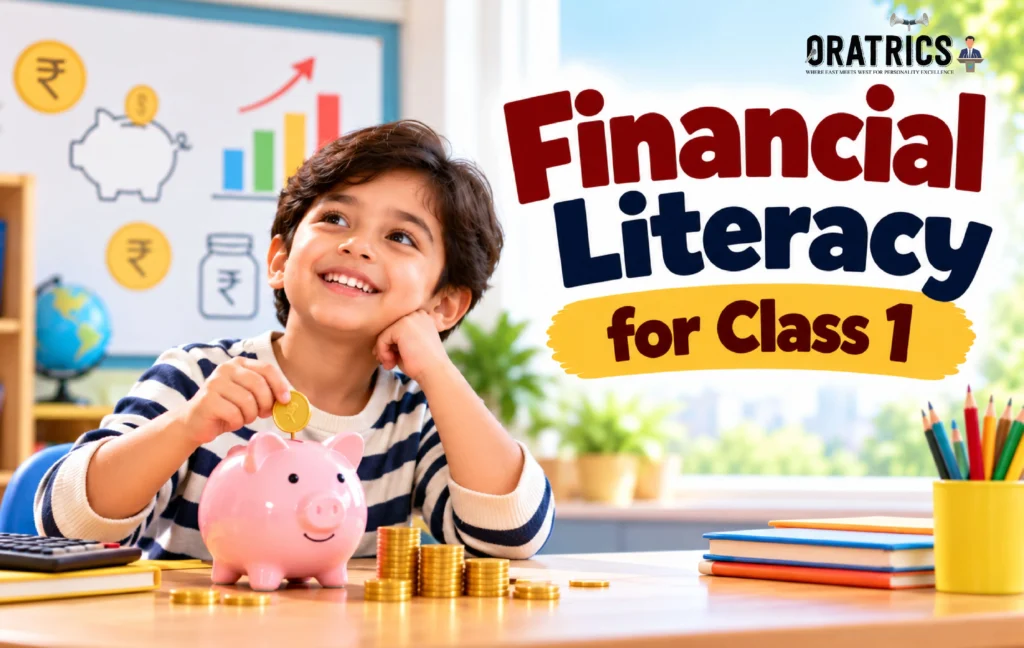
Money is part of every child’s daily life, from the coins in a piggy bank to the snacks bought at the school canteen. Starting early gives children a calm, confident relationship with money. This guide explains financial literacy for grade 1 in simple words, with games, daily-life examples and ideas for financial literacy for class 1 worksheets that parents and teachers can use right away. If you are looking for a friendly way to teach financial literacy for class 1 kids, you are in the right place.
What Is Financial Literacy for Class 1?
Financial literacy means understanding how money works and using it wisely. For a six- or seven-year-old, this does not mean banks, interest or investments. It means simple ideas a child can see and touch:
- Money is used to buy things we need and want.
- Coins and notes have different values.
- We can save money for later.
- We should think before we spend.
Think of it as learning the ABCs of money. Just as children first learn letters before reading stories, they first learn coins, saving and choosing before they learn bigger money skills.
Why Should Grade 1 Students Learn About Money?
Children form many of their habits and attitudes by the age of seven. Early money lessons help them in several ways:
- Better maths skills: Counting coins and comparing prices makes addition and subtraction real.
- Patience: Saving for a toy teaches a child to wait for something they want.
- Smart choices: Children learn the difference between a need and a want.
- Confidence: Handling small amounts of money makes children feel capable and responsible.
- Kindness: Learning to share or donate builds empathy.
Research from child-development and education bodies, including the OECD’s work on financial education, consistently supports starting money education in the early school years, because attitudes learned young tend to last.
Key Money Concepts for Grade 1 Students
Keep each idea short and practical. One concept per day or per week is plenty.
1. Knowing Coins and Notes
Show real coins and notes (or toy money). Let your child touch them, sort them by size and colour, and say their names aloud. Ask simple questions such as, “Which coin is bigger?” or “How many ₹1 coins are required to make ₹5?”
2. Needs and Wants
A need is something we must have to live and learn, such as food, water, clothes and school books. A want is something nice to have, such as a toy, a chocolate or a new game. Play a sorting game with picture cards: ask your child to place each card in the “need” or “want” box.
3. Earning Money
Explain that adults earn money by doing work. A baker sells bread, a teacher teaches, a doctor helps sick people. Children can understand that effort leads to earning, which is a gentle introduction to the value of work.
4. Saving Money
Give a piggy bank to your child. When they can see coins piling up, saving feels exciting. Set a small goal and let them fill the jar.
5. Spending Wisely
Before buying, teach three quick questions: Do I need it? Can I afford it? Can I wait? Even a small spending choice, like picking one snack from two options, is good practice.
6. Sharing and Giving
Encourage your child to put a coin in a donation box or buy a small gift for a friend. This shows that money can be used to help others.
Read More:
Key Money Concepts for Grade 1 Students Simple Learning Plan for a Financial Literacy for Class 1 Kids
The table below shows an easy four-week plan.
Week | Topic | Easy Activity | What the Child Learns |
1 | Coins and notes | Sort and name toy money | Identify money and its value |
2 | Needs and wants | Picture card sorting game | Make simple choices |
3 | Saving | Decorate a piggy bank | Patience and goal setting |
4 | Spending and sharing | Role-play a pretend shop | Counting, choosing and giving |
Fun Activities and Games to Teach Money Skills
Young children learn best through play. Try these ideas:
- Pretend shop: Set up a small shop with household items and price tags. Take turns being the buyer and the shopkeeper.
- Piggy bank challenge: Add one coin each day and count the total every Sunday.
- Coin hunt: Hide coins around the room and ask your child to find and count them.
- Story time: Read picture books about saving and sharing, then ask what the character did with their money.
- Grocery trip: Let your child pick two items and hand over the money at the counter, with you nearby.
Using Financial Literacy for Class 1 Worksheets Effectively
Worksheets help children practise what they have learnt and give teachers and parents a simple way to check understanding. Good financial literacy for class 1 worksheets should be colourful, short and easy to read. Look for these types:
- Coin matching: Match the coin to its name or value.
- Count the money: Count pictures of coins and write the total.
- Need or want: Tick the correct box for each picture.
- Fill in the blanks: Simple sentences such as “I keep my savings in a ______.”
- Colouring pages: Colour a piggy bank, a shop or a market scene.
- Simple word problems: “Riya has ₹5. She buys a pencil for ₹2. How much is left?”
Tips for getting the best results:
- Keep each worksheet to 10–15 minutes.
- Pair the worksheet with a real-life activity, such as using actual coins.
- Praise effort, not just correct answers.
- Repeat the same topic with different worksheets across the week.
- Review mistakes together in a friendly way.
Tips for Parents and Teachers
- Use everyday moments, such as shopping or paying a bill, as teachable moments.
- Use simple words and short sentences.
- Let your child make small mistakes with small amounts of money. This is how they learn.
- Be a good role model. Children copy what they see adults do with money.
- Keep sessions short and joyful rather than forced.
- Give praise when your child saves, shares or makes a thoughtful choice.
Common Mistakes to Avoid
- Teaching too many ideas at once.
- Using complex words like “investment” or “interest” too early.
- Using money only as a reward or punishment.
- Saying “we can’t afford it” in a way that makes money feel scary. Try “we are saving for something else” instead.
Frequently Asked Questions
Children can begin learning simple money ideas, like recognising coins and understanding saving, from around 5 or 6 years old. In grade 1, short and playful lessons work best.
Use real-life moments such as shopping trips, a piggy bank, pretend shop games and story books. Keep lessons short, fun and connected to what your child already sees every day.
Yes. Worksheets reinforce learning through practice, such as counting coins, matching values and sorting needs and wants. They work best when combined with hands-on activities.
There is no fixed amount, and every family is different. Many parents start with a very small amount so the child can practise saving and choosing. The goal is learning, not the amount.
Want your child to build these skills with an expert mentor?