Table of contents
I’ve sat through more school assemblies than I can count, and there’s one thing that happens every single time. A kid gets called up to speak, and the moment they reach the mic, their mind just goes empty. Not because they’re nervous about speaking in front of people, but because they genuinely don’t know what to say. Give a student good one minute speech topics and a rough idea of what to say, and half the battle is already won. That’s really the whole point of this list.
Below you’ll find over 150 one minute speech topics sorted roughly by class level, and five full scripts you can read as they are or tweak in your own words.
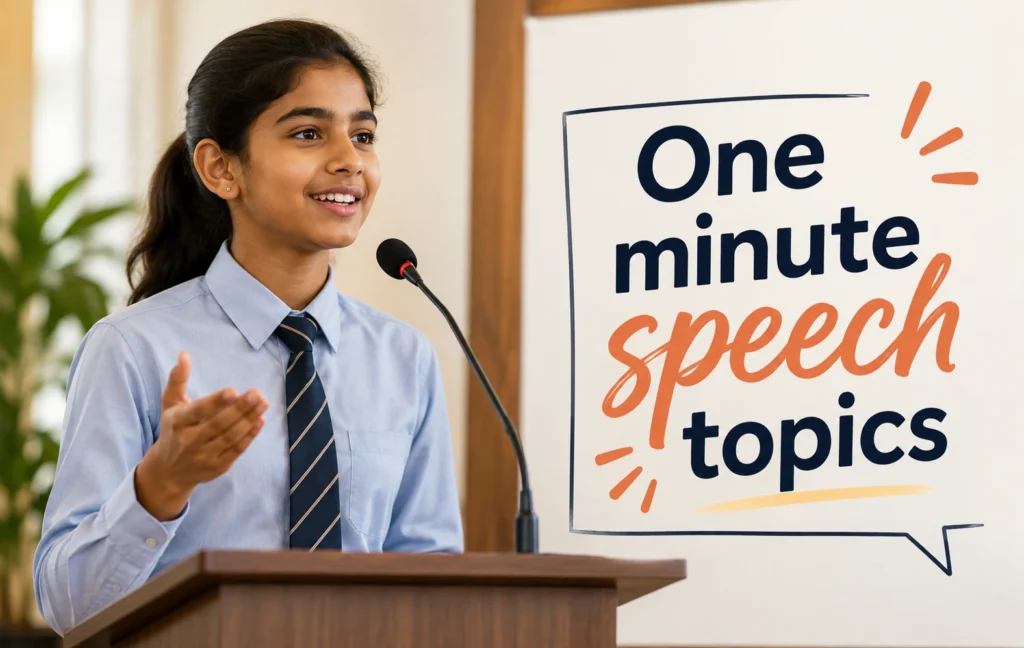
Why One Minute Speech Topics Matter for Students
Public speaking doesn’t get nearly enough credit as a life skill in school. It’s usually treated like a formality, something you do for two minutes during assembly and then forget about. But a one minute speech topic, when it’s used well, actually teaches a student to think in a straight line. No wandering, no padding, just one idea explained clearly before the clock runs out. That’s why teachers keep coming back to short speech topics, one minute speech assignments, and extempore rounds during morning assembly and English periods.
A 60 second speech is unforgiving in a good way. There’s no time to ramble, so students end up learning to:
- Pick one idea and actually stay on it
- Build a rough shape, an opening line, a couple of points, a closing line
- Work on pronunciation, pace, and looking up instead of at their shoes
- Get comfortable on stage bit by bit, without it feeling like a huge deal
This is also why younger kids do better with easy speech topics, things pulled straight from their own life. Start simple, let the difficulty creep up naturally as they move from Class 1 toward Class 10.
How to Choose the Right Speech Topic by Class
A Class 1 student rambling happily about “My Favourite Animal” makes complete sense. Ask a Class 10 student to do the same thing and it falls flat, they need something with a bit more meat to it, like “Social Media: Boon or Bane.” So here’s a class wise breakdown that should help you match the topic to what the student can actually handle, both in vocabulary and in understanding.
Class 1 to 3: Simple, Familiar, and Visual Topics
Young kids talk best about things they can point to. Their pet, their toy, their favourite food, that sort of thing.
- My Favourite Animal
- My Best Friend
- My Family
- My Favourite Festival
- My School
- My Favourite Toy
- Rainy Day Fun
- My Favourite Food
- Colours Around Us
- My Pet
- Trees Are Our Friends
- My Favourite Season
- Good Habits
- My Favourite Teacher
- Water is Precious
- My Favourite Game
- Cleanliness is Important
- My Favourite Cartoon Character
- Helping Our Parents
- My Dream Holiday
Class 4 to 5: Everyday Values and Simple Awareness Topics
Kids this age can start handling a small moral idea without it feeling forced.
- Importance of Trees
- Save Water, Save Life
- Discipline in Life
- My Favourite Book
- Importance of Sports
- Kindness Towards Animals
- Say No to Plastic
- My Role Model
- Importance of Reading
- Why I Love My Country
- Value of Time
- Importance of Sleep
- My Favourite Subject
- Good Manners
- Importance of Exercise
- Digital Devices: Good or Bad?
- Cleanliness Drive
- My Favourite Historical Place
- Importance of Sharing
- Truth Always Wins
Class 6 to 7: Awareness, Environment, and Basic Social Issues
Here’s where topics start opening up a little wider, things happening around them rather than just to them.
- Global Warming
- Importance of Girl Education
- Save the Environment
- Value of Education
- My Favourite Freedom Fighter
- Importance of Yoga
- Junk Food vs Healthy Food
- Impact of Television on Students
- Importance of Trees in Our Life
- Water Conservation
- Importance of Sports in Student Life
- My Vision for India
- Wildlife Conservation
- Importance of Kindness
- Effects of Pollution
- Importance of Cleanliness
- My Favourite National Leader
- Importance of Time Management
- Life Without Electricity
- Benefits of Reading Newspapers
Class 8 to 9: Critical Thinking and Current Awareness
Now students can actually take a position on something and defend it a little, which makes these good for school level competitions too.
- Social Media: Boon or Bane
- Importance of Mental Health
- Impact of Technology on Students
- Climate Change and Its Effects
- Gender Equality
- Importance of Financial Literacy
- Online Learning vs Classroom Learning
- Impact of Peer Pressure
- Importance of Skill Development
- Cyberbullying, A Growing Concern
- Importance of Voting Rights
- Effects of Junk Food on Health
- Importance of Self Discipline
- Role of Youth in Nation Building
- Digital India: Opportunities and Challenges
- Importance of Water Conservation
- Should Homework Be Banned?
- Importance of Physical Fitness
- Impact of Artificial Intelligence
- Value of Failure in Success
Class 10: Analytical, Opinion Based, and Exam Relevant Topics
Board year, so the speeches should sound like it. A bit more maturity, a clear opinion, some awareness of what’s actually going on in the world.
- Is Social Media Doing More Harm Than Good?
- Artificial Intelligence and the Future of Jobs
- Importance of Time Management for Students
- Should Exams Be Abolished?
- Impact of Climate Change on Our Future
- Importance of Financial Independence
- Role of Students in a Digital Economy
- Mental Health Awareness Among Teenagers
- Importance of Reading Habits in the Digital Age
- Women Empowerment in Modern India
- Should Mobile Phones Be Allowed in Schools?
- Importance of Sustainable Development
- Impact of Globalization on Indian Culture
- Importance of Career Planning
- Should Plastic Be Completely Banned?
- Importance of Vocational Education
- Effects of Social Comparison on Youth
- Role of Technology in Education
- Importance of Emotional Intelligence
- My Vision for a Better India
Bonus: 50+ Quick Speech Topics for Any Occasion
These work for pretty much any age, any assembly, any last minute “you’re speaking in ten minutes” kind of situation.
- Independence Day
- Republic Day
- Teacher’s Day
- Children’s Day
- Gandhi Jayanti
- World Environment Day
- International Yoga Day
- World Health Day
- Importance of Festivals
- My Favourite Sport
- Honesty is the Best Policy
- Unity in Diversity
- My Dream Job
- Importance of Family Values
- Books Are Our Best Friends
- Importance of Discipline in Life
- My Favourite Author
- Value of Hard Work
- Importance of Positive Thinking
- Life is a Journey
- My Favourite Scientist
- Space Exploration
- Importance of Traffic Rules
- Road Safety Awareness
- Value of Patience
- Importance of Team Spirit
- My Favourite Monument
- Importance of National Symbols
- Save Girl Child
- Digital Literacy for Students
- Importance of First Impressions
- Benefits of Morning Walks
- Water Is Life
- Importance of Recycling
- My Country, My Pride
- Importance of Communication Skills
- Value of Respect
- Importance of Volunteering
- My Favourite Place to Visit
- Importance of Cultural Heritage
- Say No to Bullying
- Importance of Nutrition
- My Favourite Invention
- Power of Positive Habits
- Importance of Self Confidence
- Effects of Noise Pollution
- Importance of Forests
- My Role in a Clean India
- Importance of Punctuality
- Why I Love My School
- Importance of Sports for Girls
- Value of Perseverance
Ready to Speak 60 Second Scripts
Here are five scripts, timed to land right around 60 seconds if read at a normal, unhurried pace. Use them as they are, or better, make small changes so it sounds like the student’s own voice.
Script 1: My Favourite Festival (Class 1 to 3 Level)
“Good morning everyone. Today I want to talk about my favourite festival, Diwali. Diwali is called the festival of lights. We clean our homes, light diyas, and decorate with colourful rangoli. My family and I burst crackers, wear new clothes, and eat delicious sweets together. We also visit our relatives and exchange gifts. Diwali reminds us that good always wins over evil. It is a time of happiness, love, and togetherness. I feel very excited every year when Diwali comes. Thank you.”
Script 2: Importance of Trees (Class 5 to 7 Level)
“Respected teachers and dear friends, good morning. Today I would like to speak about the importance of trees. Trees give us oxygen to breathe and take in the carbon dioxide we release. They provide shade, fruits, wood, and shelter to countless birds and animals. Without trees, our environment would become unbalanced, leading to problems like global warming and soil erosion. Sadly, many trees are being cut down every day for construction and industries. It is our responsibility to plant more trees and protect the ones we already have. Let us all take a pledge today to plant at least one tree this year. Remember, trees are not just plants, they are the lungs of our planet. Thank you.”
Script 3: Social Media, Boon or Bane (Class 8 to 10 Level)
“Good morning everyone. Today I stand before you to speak on a topic that affects almost every one of us, social media. Is it a boon or a bane? On one hand, social media connects us with people across the globe, helps us learn new skills, and gives students access to endless information. On the other hand, excessive use leads to distraction, poor mental health, and addiction, especially among teenagers. The truth is, social media itself is neither good nor bad, it depends entirely on how we use it. If we use it responsibly, with a clear time limit and purpose, it can be a powerful tool for growth. But if we let it control our lives, it becomes harmful. As students, we must learn to balance our screen time with real life relationships, studies, and hobbies. Let us use social media wisely, not blindly. Thank you.”
Script 4: Importance of Time Management (Class 6 to 8 Level)
“Good morning everyone. Today I want to speak about a habit that can change our entire life, time management. Every one of us gets the same 24 hours in a day, yet some people achieve so much while others struggle to finish even small tasks. The difference lies in how we manage our time. When we plan our day, set priorities, and avoid wasting hours on distractions, we get more done and feel less stressed. As students, time management helps us balance studies, play, hobbies, and rest without feeling overwhelmed. It also teaches us discipline and responsibility, qualities that stay with us for life. So let us all promise to value every minute we get, because time once lost never comes back. Thank you.”
Script 5: Save Water, Save Life (Class 3 to 5 Level)
“Good morning teachers and friends. Today I want to talk about something we use every single day, water. Water is one of the most precious gifts of nature, but we often waste it without thinking. We leave taps running, use too much water for washing, and forget that many people around the world do not even have clean water to drink. If we do not save water today, our future generations may not have enough of it. We can all help by closing taps properly, fixing leaking pipes, and using water carefully at home and school. Every drop counts, and every one of us has a role to play. Let us promise today to save water, because saving water truly means saving life. Thank you.”
Read More:
Tips to Deliver a Perfect One Minute Speech
Having a good topic is only half of it. I’ve seen students with a brilliant script still fumble on stage, and I’ve seen a plain topic sound great just because of how it was delivered. A few things that genuinely help.
- Open with confidence. A shaky first line sets a shaky tone for everything after it.
- Stick to one idea. Sixty seconds isn’t enough time for three arguments, so pick the strongest one and build around it.
- Follow a loose structure, something like a quick intro, two or three main points, and a closing line that actually lands.
- Practice out loud with a timer running. Read it four or five times and you’ll naturally feel where it needs trimming.
- Don’t memorize word for word. Learn the flow of ideas instead, it’s much harder to go blank that way.
- Finish strong. A closing line with a bit of punch is what people actually remember afterward.
Conclusion
The right topic, paired with a script that doesn’t feel too stiff, changes everything for a nervous student. With more than 150 topics across every class level and five ready to use scripts, there’s enough here to prepare quickly without scrambling for ideas at the last minute. And if there’s one thing worth repeating, it’s this, let students put the script in their own words wherever they can. That’s usually what makes a one minute speech actually sound like them.
Frequently Asked Questions
Somewhere around 130 to 150 words, spoken at a normal, unhurried pace.
Anything from their own life. Family, pets, festivals, food. Kids speak better about things they’ve actually lived through rather than things they’ve read about.
Practicing out loud in front of a mirror or a family member helps more than almost anything else. So does taking a breath before starting and picking a topic the student genuinely understands rather than one that just sounds impressive.
Yes. Every topic here works for morning assembly, English period presentations, elocution competitions, and extempore rounds alike.
Want your child to build these skills with an expert mentor?