Table of contents
Talent gets you noticed. Communication gets you promoted. And nothing showcases communication skills quite like standing up and speaking in front of people, whether it’s a team meeting, a client pitch, or a full conference hall. If you’ve ever wondered why certain coworkers climb the ladder faster, get pulled into the “important” meetings, or somehow always end up leading the big project, it usually comes down to one thing: they’re comfortable speaking up. This article breaks down the real, practical advantages of public speaking, the kind that actually show up in day to day work, not just theory.
Why Public Speaking Still Matters in Today's Workplace
We live in a world of Slack pings, quick emails, and five-minute video calls, so it’s easy to assume public speaking has become less relevant. It’s actually the opposite. When most communication happens through a keyboard, the person who can stand up and speak clearly to five people or five hundred instantly stands out. Presentation skills and speaking confidence have quietly become career accelerators, even if no job description spells that out.
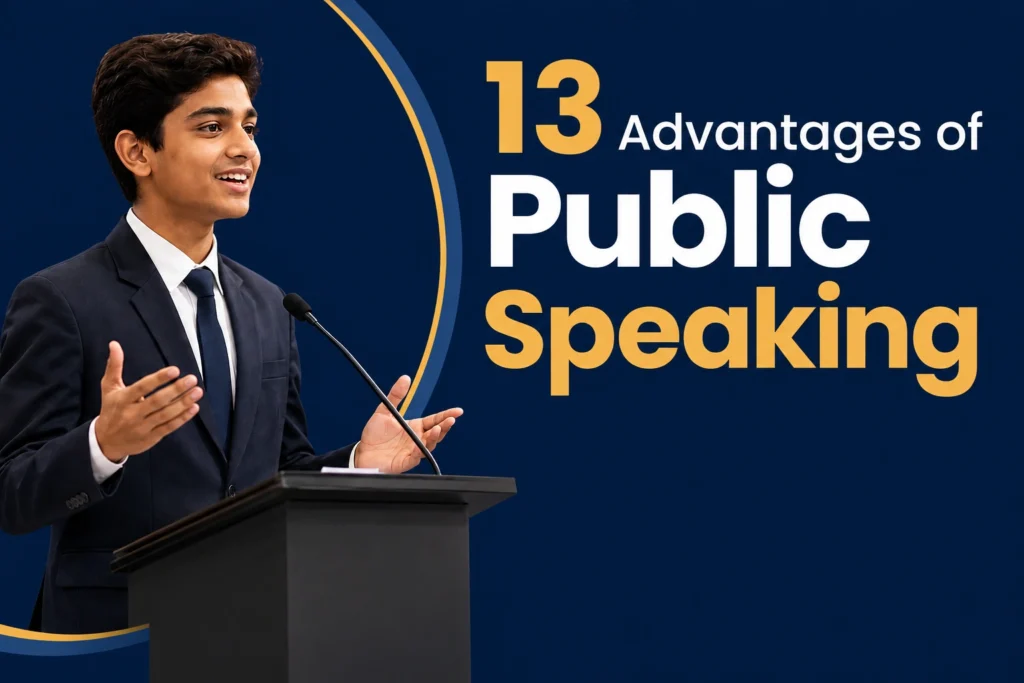
Here are 13 advantages of public speaking that can genuinely move a career forward.
1. It Builds Instant Credibility
Speaking clearly and confidently on a topic makes people assume competence, often before your expertise is even verified. Leadership circles sometimes call this the “spotlight effect.” Every time someone explains a project, walks a team through an idea, or leads a meeting, they’re building a reputation as someone who understands their field.
2. It Sharpens Critical Thinking
Preparing a talk or presentation forces structured thinking. You have to identify the main point, back it up with evidence, and anticipate questions before they’re asked. That habit carries over into everyday decision-making, problem-solving, and how you write emails or reports.
3. It Improves Communication Skills Overall
Public speaking isn’t limited to the stage or the boardroom. The skills involved- pacing, tone, reading an audience, transfer directly into one-on-one conversations, client calls, and interviews. Strong public speakers also tend to be better listeners, since audience awareness works both ways.
4. It Builds Genuine Confidence
There’s a specific kind of confidence that only comes from getting through a nerve-wracking talk and realizing it went fine. Each presentation chips away at self-doubt. Over time, that confidence shows up in negotiations, interviews, and everyday workplace interactions.
5. It Expands Professional Networks
Speaking at conferences, industry panels, or internal company events puts you in front of people you’d otherwise never meet. Public speaking is one of the fastest ways to grow a professional network organically, since people remember faces and voices far longer than a name in an email thread.
6. It Builds Thought Leadership
Consistently sharing insights through talks, webinars, or simply speaking up in meetings positions someone as a go-to person on a topic over time. Thought leadership often precedes promotions, leadership roles, and even entrepreneurial opportunities.
7. It Strengthens Leadership Presence
Strong leaders are rarely quiet in the background. Leadership and public speaking go hand in hand, whether it’s rallying a team, presenting results, or handling a difficult conversation with stakeholders. “Executive presence,” a term common in leadership development, is built largely on how well someone speaks and carries themselves in front of others.
8. It Sharpens Persuasion and Influence
Every workplace runs on ideas competing for attention, budgets, hiring decisions, strategy shifts. The person who articulates their idea most persuasively often wins buy-in, regardless of whose idea was technically stronger. Public speaking trains the ability to influence decisions and win stakeholders over.
9. It Reduces Anxiety Over Time
This sounds counterintuitive, but repeated exposure to public speaking actually lowers anxiety in the long run, basic exposure therapy in action. The brain gradually stops treating it as a threat. Many professionals report that once public speaking feels manageable, general meeting nerves and interview jitters ease up too.
10. It Builds Storytelling Skills
Facts inform people; stories move them. Public speaking teaches narrative structure almost by default setup, tension, resolution which makes presentations, pitches, and even performance reviews more memorable. In competitive workplaces, how well someone tells the story of their work can matter as much as the work itself.
11. It Opens New Career Opportunities
Recruiters and hiring managers consistently rank communication skills near the top of what they look for, often above raw technical ability for leadership roles. A reputation as a confident, clear speaker leads to invitations for new projects, client-facing work, and opportunities that wouldn’t otherwise come up.
12. It Strengthens Written Communication
People who practice public speaking often become sharper writers as a side effect. Structuring an argument to say out loud teaches you to cut unnecessary words, get to the point faster, and think about how the audience will receive information all of which improves emails, reports, and proposals.
13. It Builds Emotional Intelligence
Reading a room, adjusting tone based on audience reaction, and handling tough questions gracefully all require emotional intelligence. Public speaking forces closer attention to how others perceive and respond, which improves both interpersonal skills and the ability to manage teams effectively.
How to Start Improving Public Speaking Skills
Knowing the advantages of public speaking is one thing, building the skill is another. A few practical starting points:
- Start small. Speak up more in team meetings before moving to larger presentations.
- Join a speaking group. Toastmasters and similar groups exist specifically for low-pressure practice.
- Record yourself. Uncomfortable, but one of the fastest ways to spot habits worth fixing.
- Study great speakers. Notice how they use pauses, tone shifts, and storytelling to hold attention.
- Practice consistently. This is a repetition skill, not a talent skill improvement comes from reps, not natural ability.
Conclusion
Public speaking isn’t reserved for extroverts, executives, or the naturally charismatic. It’s a skill built gradually, one talk at a time, and it quietly shapes how someone is seen, remembered, and considered for opportunities at work.
The advantages of public speaking touch nearly every part of a career — credibility, leadership presence, networking, persuasion, and confidence all trace back to this one skill. Getting comfortable speaking up, speaking clearly, and speaking with conviction pays off well beyond the moment at the podium.
Frequently Asked Questions
The biggest ones are increased credibility, stronger leadership presence, better persuasion skills, and a wider professional network. The confidence boost is often what people notice first, but the career impact runs deeper than that.
It can, though not because speaking well replaces actual skill. Visibility matters at work, and public speaking is one of the clearest ways to demonstrate readiness for a bigger role.
Yes. Public speaking ability has more to do with preparation and repetition than personality type. Introverts often bring thoughtfulness and structure that makes their talks land well.
There’s no fixed timeline, but most people notice a real shift after 8–10 genuine speaking opportunities, whether that’s meetings, small presentations, or anything similar. Consistency matters more than time passing.
Often, yes. Once public speaking stops feeling overwhelming, general social anxiety and interview nerves tend to ease as well. It’s not a cure, but the effect does tend to carry over.
Start small and start now, volunteer for the next team update, record a practice session, or join a low-pressure group like Toastmasters. Waiting for the “right moment” usually just delays progress.
Want your child to build these skills with an expert mentor?