Table of contents
- What Is Financial Literacy and Why Does It Matter in Class 10?
- Core Topics in Grade 10 Financial Literacy
- Quick Comparison: Saving vs. Investing
- How Financial Literacy for Class 10 Worksheets Help
- Smart Money Habits Every Grade 10 Student Can Start Today
- Common Money Mistakes Teenagers Should Avoid
- Oratrics Financial Literacy with Money verse Program
- Frequently Asked Questions
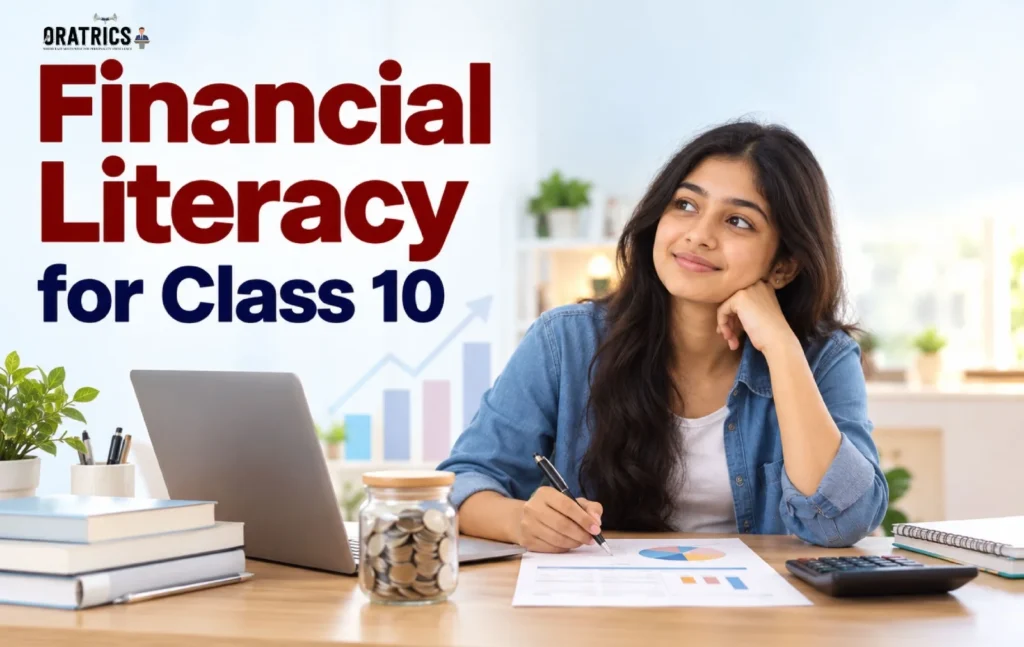
Money decisions start earlier than most teenagers expect. Whether it is managing pocket money or understanding a bank account, financial literacy for class 10 gives students skills they will use for life. This guide explains the core ideas of grade 10 financial literacy in simple language and shows how financial literacy for class 10 worksheets can turn theory into daily habits.
What Is Financial Literacy and Why Does It Matter in Class 10?
Financial literacy means having the knowledge and skills to make smart decisions about money. It includes understanding how to earn, manage expenses, build savings, handle loans, and make informed investment choices to achieve financial goals.
Class 10 is a turning point. Students are choosing streams, thinking about careers, and often handling their own money for the first time. Learning these skills now helps them avoid common mistakes such as overspending, ignoring savings, or falling for online scams.
Key benefits for grade 10 students:
- Better control over pocket money and gifts
- Confidence when talking about money with family
- Awareness of future costs like higher education
- Protection from fraud and unwise borrowing
- A strong base for commerce, economics, or business subjects
Core Topics in Grade 10 Financial Literacy
1. Needs vs. Wants
A need is something you must have, such as food, school fees, or transport. A want is something nice to have, like a new gadget. Sorting your expenses into these two groups is the first step toward smart spending.
2. Budgeting Made Simple
A budget is basically a plan of how you use or save your money. Write down your monthly income (pocket money, gifts), list your expenses, and see what is left. A popular guide is the 50-30-20 rule: 50% for needs, 30% for wants, and 20% for savings. Students can adjust the split to fit their situation.
3. Saving Habits
Start small, even a fixed amount every week. Keep an emergency fund for unexpected costs, and set short-term goals (a school trip) and long-term goals (college fees).
4. Banking Basics
Every student should know how a savings account works, what interest is, and how to use a debit card and UPI safely. Never share your PIN, OTP, or passwords with anyone, including friends.
5. Simple and Compound Interest
Interest is the additional money you earn when you save or invest money, or the cost you pay for borrowing money. Simple interest is calculated only on the original amount borrowed or saved, without including previously earned interest. Compound interest is calculated on the amount plus earlier interest, so savings grow faster over time. This is why starting early matters.
6. Introduction to Investing
Investing means putting money into assets that may grow in value. At this age, the goal is understanding, not trading. Learn the basics of fixed deposits, mutual funds, and shares, and remember that higher returns usually come with higher risk.
Quick Comparison: Saving vs. Investing
Feature | Saving | Investing |
Purpose | Short-term goals and emergencies | Long-term wealth growth |
Risk level | Very low | Low to high, depending on the option |
Returns | Small and predictable | Can be higher but not guaranteed |
Access to money | Easy and quick | May take time or involve loss |
Example | Bank savings account | Mutual funds, shares |
How Financial Literacy for Class 10 Worksheets Help
Reading about money is useful, but practice makes the lesson stick. Financial literacy for class 10 worksheets let students apply concepts to real situations. Good worksheets usually include:
- Budget-building exercises with sample income and expenses
- Needs vs. wants sorting activities
- Simple and compound interest problems
- Case studies on online fraud and safe banking
- Goal-setting tables for monthly savings
- Short quizzes to check understanding
Tip for parents and teachers: Use everyday examples, such as planning a family outing budget or comparing two mobile plans. Students learn faster when the numbers feel real.
Smart Money Habits Every Grade 10 Student Can Start Today
- Track every rupee you spend for 30 days
- Save before you spend, not after
- Compare prices before buying
- Avoid impulse purchases by waiting 24 hours
- Set one clear savings goal each month
- Learn to spot fake offers, phishing links, and lottery scams
- Talk to your parents about household money decisions
Common Money Mistakes Teenagers Should Avoid
- Spending without a plan. Money disappears quickly when nothing is tracked.
- Following trends blindly. Buying something just because friends have it often leads to regret.
- Ignoring small expenses. Daily snacks and app purchases add up.
- Sharing banking details. One careless message can cost real money.
- Delaying savings. Starting late means missing out on compounding.
Oratrics Financial Literacy with Money verse Program
At Oratrics, we believe money skills should be learned early, not through costly trial and error. Our financial literacy course helps school students understand how money really works, from budgeting pocket money and saving for goals to using banks and digital payments safely. Lessons are built around everyday situations teenagers actually face, so ideas feel practical instead of abstract. Learners gain confidence through hands-on activities, simple examples, and clear explanations without heavy jargon. Whether a student is simply curious or preparing for bigger decisions about education and careers, this course offers a friendly starting point for smarter, more responsible money habits that last well beyond the classroom.
Read More:
Frequently Asked Questions
It is the set of money skills taught at this level, including budgeting, saving, banking, interest, and basic investing, so students can make informed decisions.
Class 10 students are close to making bigger choices about education and careers. Early money knowledge builds confidence and prevents costly mistakes later.
You can find them through school resources, teachers, educational websites, and ed tech platforms. You can also create simple ones at home using real budgets and saving goals.
Set a small weekly amount, keep it in a separate piggy bank or savings account, and pick a clear goal. Consistency matters more than the amount.
Want your child to build these skills with an expert mentor?