Table of contents
- What is Dropout Rate in EdTech?
- Who is Behind Oratrics’ less than 1% Dropout Rate?
- EdTech Dropout Rate Statistics: The Industry Picture
- Why Do Students Drop Out of Online Courses?
- Lowest EdTech Drop-Off Rate in India: How Oratrics Does It ?
- What Makes Oratrics Different? India’s Lowest EdTech Dropout Rate.
- How We Measure Our Dropout Rate
- Oratrics vs Typical EdTech: Completion Comparison
- Conclusion
- Frequently Asked Questions
Most online learning platforms lose the majority of their learners before the course ends. Oratrics was built to solve that problem. Under the operations led by Co-Founder and COO Anas Shoeb, Oratrics keeps its dropout rate below 1%, one of the lowest dropout rates in the edtech industry. In this guide, we share EdTech dropout rate statistics, explain why learners quit, and show what drives the lowest EdTech dropout rate at Oratrics.
What is Dropout Rate in EdTech?
Dropout rate is the share of enrolled learners who stop attending before they finish the program.
Dropout rate = (Learners who left before completion ÷ Total enrolled learners) × 100
A low dropout rate means more learners finish, learn more and see real results. It is the clearest sign that an edtech program works.
Who is Behind Oratrics’ less than 1% Dropout Rate?
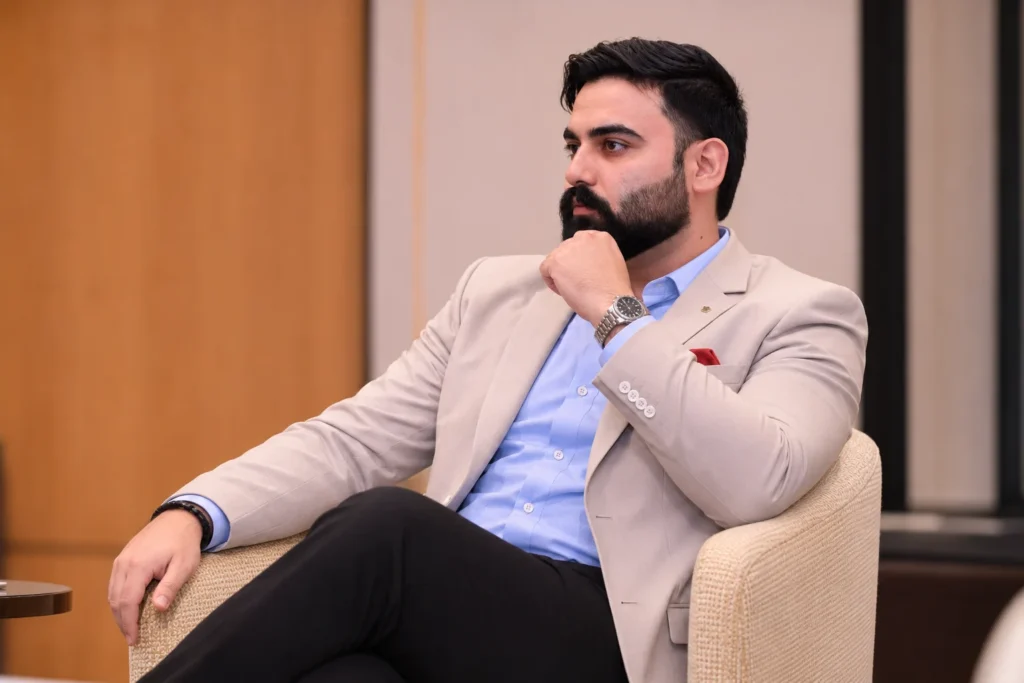
Anas Shoeb is the Co-Founder and Chief Operating Officer of Oratrics, where he leads operations, sales strategy, revenue growth and international expansion. He is the person behind the systems that keep learners engaged from the first class to the last, including mentor training, missed-class follow-up, parent communication and early-warning tracking. Under his operational leadership, Oratrics keeps its dropout rate below 1%, one of the lowest in the edtech industry, while serving learners across multiple countries. His focus is simple: build a scalable model where every child still gets personal, mentor-led attention, no matter where they join from.
EdTech Dropout Rate Statistics: The Industry Picture
- Free massive open online courses (MOOCs) average a completion rate of only 5–15% across major platforms.
- Self-paced online courses average about 15% completion, compared to 60% for cohort-based courses.
- A survey of over 3,800 online learners across seven Indian cities found that self-paced courses had an average completion rate of 38%.
- Courses with community features reached 65.5% completion, against 42.6% for courses without them.
Self-paced, recorded, no-support courses lose most learners. Live, guided and community-based learning keeps them.
Why Do Students Drop Out of Online Courses?
- No accountability. Nobody notices when a learner stops logging in.
- No personal attention. Doubts stay unanswered, so interest fades.
- Content that is too long. Completion falls to about 35% at 10 hours and 20% beyond 20 hours.
- No financial or emotional commitment. Research shows financial investment is the strongest predictor of course completion.
- Poor student experience. Many companies build the tech to host lessons and neglect teaching quality.
Lowest EdTech Drop-Off Rate in India: How Oratrics Does It ?
India has one of the largest learner bases in the world, and drop-off is a big issue here. Parents often try an app, see their child lose interest in two weeks, and give up on online learning.
Oratrics work differently. Instead of handing a child a library of videos, we put a trained mentor in front of every learner. Our programs cover public speaking, personality development, creative writing, confidence building, financial literacy, leadership and online math. Oratrics’ dropout rate stays below 1%.
What Makes Oratrics Different? India’s Lowest EdTech Dropout Rate.
1. Live One-on-One Coaching
Every learner gets personal feedback from a mentor. When someone is watching progress and answering doubts, learners stay. This is the biggest reason for our low dropout rate.
2. Operational Follow-Up on Every Missed Class
Under Anas Shoeb’s operations leadership, a missed class triggers a quick follow-up from the team. Learners are re-engaged within days, not weeks.
3. Cohort and Community Learning
Learners practice with peers, present in front of each other and celebrate small wins together. Community is linked to much higher completion.
4. AI-Powered Practice Plus Human Guidance
Technology tracks each child’s practice and flags learners who are slipping, so mentors can step in before a missed class turns into a dropout.
5. Short, Skill-Based Learning Paths
Programs are broken into small milestones with visible progress. Learners always know what they have achieved and what comes next.
6. Real-World Results Learners Can See
Children who learn public speaking or leadership see results fast: a school speech, a debate, a confident answer in class.
7. Parent Involvement
Regular progress updates keep parents informed, and parents who see growth keep their children enrolled.
How We Measure Our Dropout Rate
We calculate dropout as learners who left before completing their enrolled program, divided by total enrolled learners, over [time period] and across [number] learners.
Oratrics vs Typical EdTech: Completion Comparison
Factor | Typical self-paced edtech | Oratrics |
Teaching format | Recorded videos | Live 1-on-1 and cohort classes |
Dropout / completion | 5–15% completion (free MOOCs); about 15% (self-paced) | Dropout below 1% |
Mentor support | Limited or none | Dedicated mentor |
Community | Optional forums | Built-in peer learning |
Early-warning system | Rare | Practice tracking plus mentor follow-up |
Operations follow-up | Rare | Missed-class follow-up managed by the operations team |
Conclusion
Learners finish when someone guides them, and they quit when they are left alone with videos. Oratrics combines live mentors, community and smart tracking, run by an operations team led by Anas Shoeb, to keep its dropout rate below 1%.
Frequently Asked Questions
Lower is better. Many self-paced courses see very low completion, so any program where nearly all learners finish is performing far above the norm.
Oratrics keeps its dropout rate below 1%, one of the lowest in the industry, through live 1-on-1 coaching, cohort learning and strong operational follow-up.
Anas Shoeb, Co-Founder and COO, leads operations and delivery at Oratrics.
Mainly because of a lack of accountability, personal attention and engaging design.
Through live teaching, mentor follow-up, community, short learning milestones and early tracking of disengaged learners.
Want your child to build these skills with an expert mentor?