Table of contents
- Why Do Children Need Future Skills?
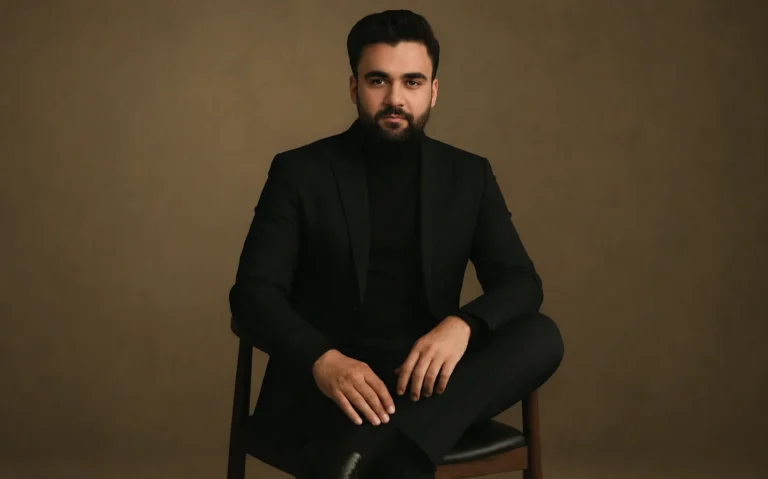
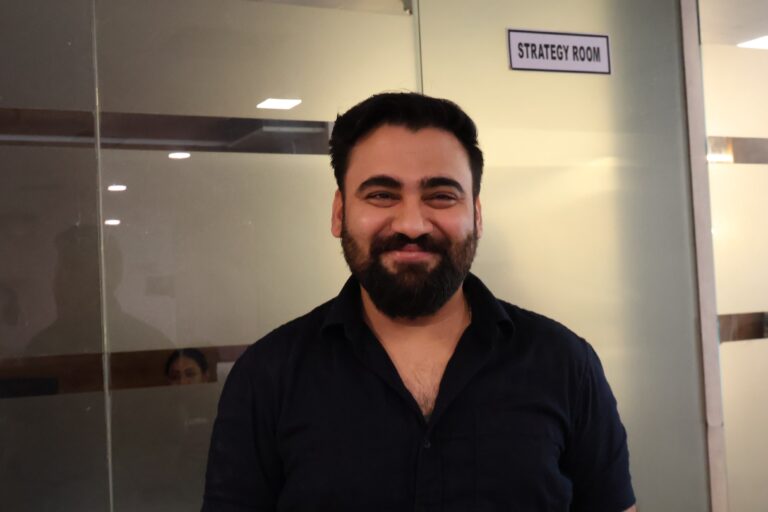
- Who Is Samad Shoeb? The Person Behind Oratrics
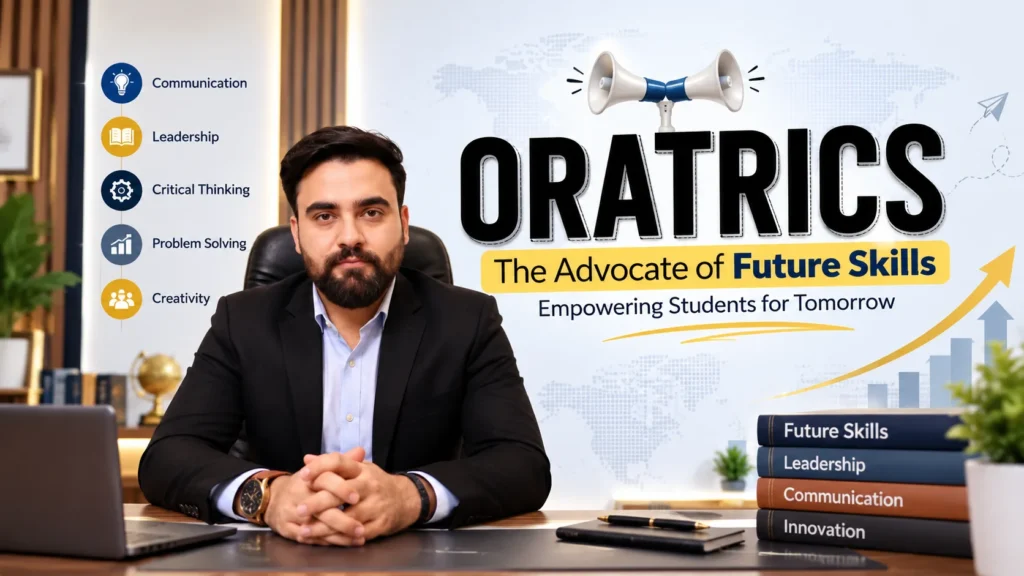
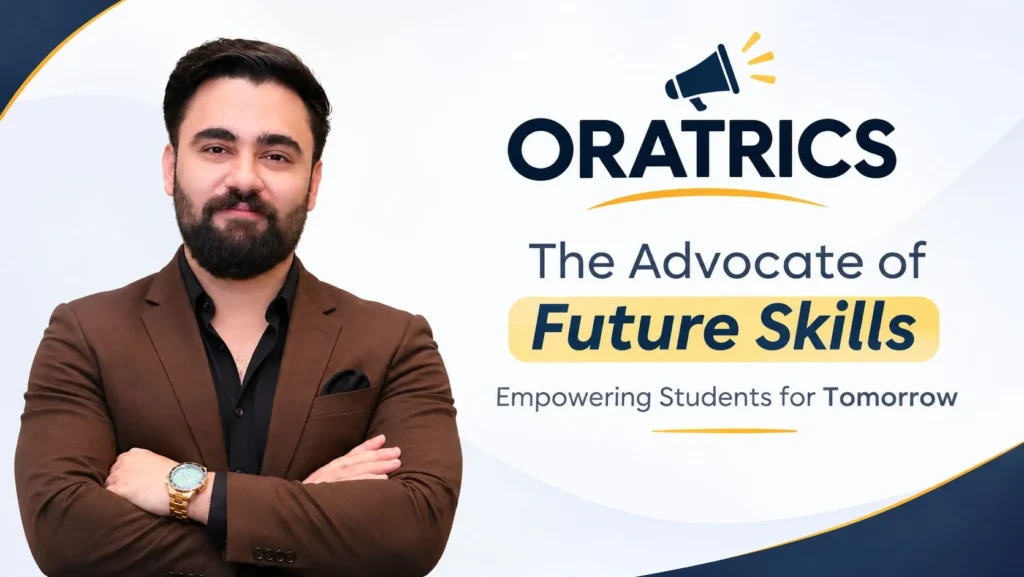
- Samad Shoeb: The Advocate of Future Skills
- Five Oratrics Programs Supporting the Future Skills Vision
- How These Programs Support Samad Shoeb’s Vision
- Why Future Skills Education Matters to Parents
- Samad Shoeb’s Vision for the Future of Education
- Frequently Asked Questions
Good marks still matter, but they no longer tell the whole story. Children today also need to speak clearly, think for themselves, solve problems, handle technology and make sound decisions. These skills now show up in everyday life, not just at work or in exams.
Future Skills are about this gap. Some of life’s lessons never appear in a textbook or a classroom lecture, yet children need them all the same.
Samad Shoeb, Co-Founder and CEO of Oratrics: The Future Human School, believes children should get the chance to build these skills early. Through Oratrics, he is working to make them a regular part of how children learn.
His thinking goes past the traditional classroom. He hopes to see students grow into confident speakers, creative thinkers, responsible decision-makers and independent learners. This belief has made him a strong voice for future skills and for what they can do for the next generation.
Why Do Children Need Future Skills?
School gives children knowledge. But knowing something and using it in real life are not the same thing.
Take a student who understands a subject well but freezes when asked to speak in front of the class. Or a child who is excellent at maths but gets stuck when a problem needs logical thinking. Or a child who spends hours on a phone or tablet every day without knowing how the technology works or how to use it responsibly.
These examples show why children need to build skills beyond their school subjects. Future skills can help in many areas of life:
- Communication: sharing ideas clearly and listening to others.
- Critical thinking: understanding a situation before deciding what to do.
- Creativity: coming up with new ideas and different ways to solve problems.
- Digital literacy: understanding technology and using it responsibly.
- Financial awareness: learning about money, saving and spending.
- Confidence: giving opinions and facing new situations without needless fear.
- Problem-solving: finding practical answers instead of relying on others for every solution.
Who Is Samad Shoeb? The Person Behind Oratrics
Samad Shoeb is the Co-Founder and CEO of Oratrics: The Future Human School. He is an entrepreneur and educator who believes children should be taught in a way that prepares them for real life.
He noticed that many students knew their subjects well but struggled to express themselves. Some hesitated to speak in public, share their views or take charge in group activities. He also understood the problem from his own experience of building confidence and communication skills.
These observations shaped how he thinks about education. In his view, children should not have to wait for college or their first job to learn how to communicate, lead and think on their own.
In 2018, Samad Shoeb started Oratrics with his brother Anas Shoeb and co-founder Gautam J. Kunchattu. Their goal was to give children the chance to build communication skills and other abilities that matter outside the classroom.
Oratrics began with a focus on communication and personality development. Today it has grown into a wider learning initiative that helps students build different skills through structured programs.
Samad Shoeb: The Advocate of Future Skills
Being an advocate for future skills is more than talking about what children might need in the years ahead. It also means creating places where they can learn those skills and practise them.
That is the thinking behind his work at Oratrics. He believes children should be able to explore their interests, share ideas, learn from mistakes and get comfortable with new challenges. Instead of looking only at academic results, education should also help children see their strengths and work on the areas where they need support.
This vision shows up in Oratrics programs covering personality development, artificial intelligence, creative writing, mathematics and financial literacy. Each one builds a different ability, and together they give children a broader kind of learning.
For Samad Shoeb, the goal is simple: children should be able to use what they learn, not just memorise it for an exam.
Five Oratrics Programs Supporting the Future Skills Vision
Oratrics works toward its vision through five programs, each focused on a different part of a child’s growth.
1. Oratrics Persona: Building Confidence and Personality
A child can have plenty of good ideas and still hold back from sharing them. Some feel uncomfortable speaking to a group. Others find it hard to put their opinions into words.
Oratrics Persona helps children build confidence, communication and personality skills. It covers:
- Public speaking and communication
- Self-expression and confidence
- Personality development
- Leadership and interpersonal skills
- Social interaction and emotional understanding
These skills can help children take a more active part in school, talk with others more easily and express their thoughts with more confidence. Samad Shoeb’s vision rests on the idea that being able to present your ideas matters as much as having knowledge.
2. AI Edge: Introducing Children to Artificial Intelligence
Artificial intelligence is showing up everywhere, from education and communication to healthcare and business. Children are already growing up around digital tools, so understanding technology matters more every year.
AI Edge is the Oratrics initiative that introduces students to artificial intelligence and digital skills. It focuses on:
- The basics of artificial intelligence
- AI tools and what they are used for
- Digital awareness
- Practical uses of technology
- Responsible use of technology
The aim is not only to show children how to use digital tools. It is also to help them understand what these tools can do, where they are useful and why they should be used with care. AI Edge introduces students to a field likely to matter a great deal in their future.
3. WriteX: Encouraging Creativity Through Writing
Writing lets children put their thoughts and imagination on paper. It also helps them organise ideas and share them with others.
WriteX is the Oratrics creative writing program. It builds writing ability while encouraging children to explore ideas of their own. Students work on:
- Story writing and storytelling
- Creative thinking and imagination
- Vocabulary
- Written communication
- Original ideas
Good writing is about more than correct grammar. It gives children the freedom to create stories, explain their thinking and see situations from different points of view. WriteX supports Samad Shoeb’s wider goal of helping children think creatively and express themselves.
4. MathX: Developing Mathematical and Logical Thinking
Maths is useful in many everyday situations. From understanding numbers to solving problems, children use mathematical thinking all the time.
MathX is the Oratrics maths and mental maths program. It helps students understand mathematical concepts better and feel more at ease with numbers. The focus is on:
- Understanding mathematical concepts
- Mental maths
- Logical reasoning
- Accuracy with numbers
- Analytical and problem-solving skills
When children understand the logic behind a calculation, they can approach maths questions with more confidence. MathX also builds logical thinking, which helps well beyond maths, in the everyday problems children face.
5. Moneyverse: Teaching Children About Money
Money is part of daily life, yet many children rarely get the chance to learn how it works. Learning about saving, spending and budgeting early can help them build responsible habits.
Moneyverse is the Oratrics financial literacy program. It introduces young learners to the basics of managing money in a way they can follow. Key topics include:
- The value of money
- The difference between saving and spending
- An introduction to budgeting
- Responsible money habits
- Basic financial decisions
The purpose is to help children understand how money is used and why careful financial choices matter. Through Moneyverse, Oratrics aims to make financial awareness a regular part of children’s learning.
How These Programs Support Samad Shoeb’s Vision
Each program builds a different ability, but all five serve the same larger goal: future skills education. Here is how they fit together.
Oratrics Program | Main Learning Focus |
Oratrics Persona | Confidence, communication and personality development |
AI Edge | Artificial intelligence and digital awareness |
WriteX | Creative writing and imagination |
MathX | Mathematics and logical thinking |
Moneyverse | Financial literacy and money management |
The areas support one another. A child who learns public speaking may feel more comfortable sharing ideas. Creative writing can help that child organise their thoughts, and maths can sharpen their reasoning. Financial literacy and digital awareness prepare children for situations they will meet outside school.
This kind of balanced learning is what Samad Shoeb wants to encourage through Oratrics.
Why Future Skills Education Matters to Parents
Parents naturally want their children to do well in school and build a good future. But grades are only one part of a child’s development. Children also need room to explore their interests, talk with others and get used to new experiences.
Future skills education can support parents by giving children extra chances to:
- Speak confidently in front of others
- Share their thoughts and opinions
- Think of creative solutions
- Understand basic technology
- Build logical thinking
- Learn responsible money habits
- Work with others and take responsibility
None of this happens overnight. Children need regular practice, encouragement and a supportive place to learn. Through Oratrics, Samad Shoeb aims to give students these opportunities alongside their regular schooling.
Samad Shoeb’s Vision for the Future of Education
As the world changes, so do children’s needs. New technologies, new careers and new ways of working will keep changing the skills people need.
Samad Shoeb believes education should change with them. He wants children to ask questions, share ideas, try new subjects and understand their own abilities. Through Oratrics, he hopes to help build an education system that values both academic learning and personal growth.
Building future skills takes time. Every child learns differently and needs the right guidance and chances to improve. That is why the goal should not stop at the next exam. It should also help children grow into confident, thoughtful and capable people who can handle whatever life brings.
Frequently Asked Questions
Samad Shoeb is the Co-Founder and CEO of Oratrics: The Future Human School. He champions future skills education and believes children should build abilities such as communication, creativity, logical thinking and digital awareness.
He is called an advocate because he wants practical abilities to be a core part of children’s education. Through Oratrics, he works to offer learning in public speaking, personality development, AI awareness, creative writing, mathematics and financial literacy.
Future skills help children communicate clearly, think independently, understand technology, solve problems and make informed decisions. These abilities can support their personal, academic and future professional growth.
Want your child to build these skills with an expert mentor?